07. Material Revolution: Devices That Bend, Stretch, and Heal
Imagine: in five to ten years, complaining about a “fragile screen” will sound as ridiculous as worrying about scratching a vinyl record. Ready for tech that flexes, stretches, and heals like living tissue?
We’re entering the decade where rigid, breakable gadgets become relics. By 2033, the last stiff smartphone body will be recycled alongside old plastic flip-phone shells. By 2035, 99% of wearables and portables will ride on flexible or stretchable materials—rollable displays, endlessly foldable designs, self-healing surfaces. By 2040, more than half of personal tech will mimic skin: stretching effortlessly, repairing itself, and blending seamlessly with your body.
And this isn’t just concept renders. It’s real progress hitting right now in 2025: Samsung’s rollable OLED panels already in production, self-healing polymers on phones, stretchable circuits emerging from Stanford and Samsung labs.
Three unstoppable waves already rolling out
-
Rollable and foldable evolve far beyond today
2025: Samsung and LG ship true rollable OLEDs; foldables reach full maturity.
2028: Triple-fold and rollable designs become flagship standards.
2032: Devices that unroll from a slim wristband into full tablet size—or anything in between. -
Self-healing materials erase damage automatically
2025: Polymers that seal scratches in seconds already in prototypes from LG and Motorola.
2029: Coatings and internal structures that autonomously repair micro-fractures with embedded chemistry.
2038: Tech that recovers from deep bends or punctures, lasting decades without wear. -
Stretchable electronics mimic human skin
2025: Fully stretchable circuits and batteries demonstrated by Samsung and UC San Diego.
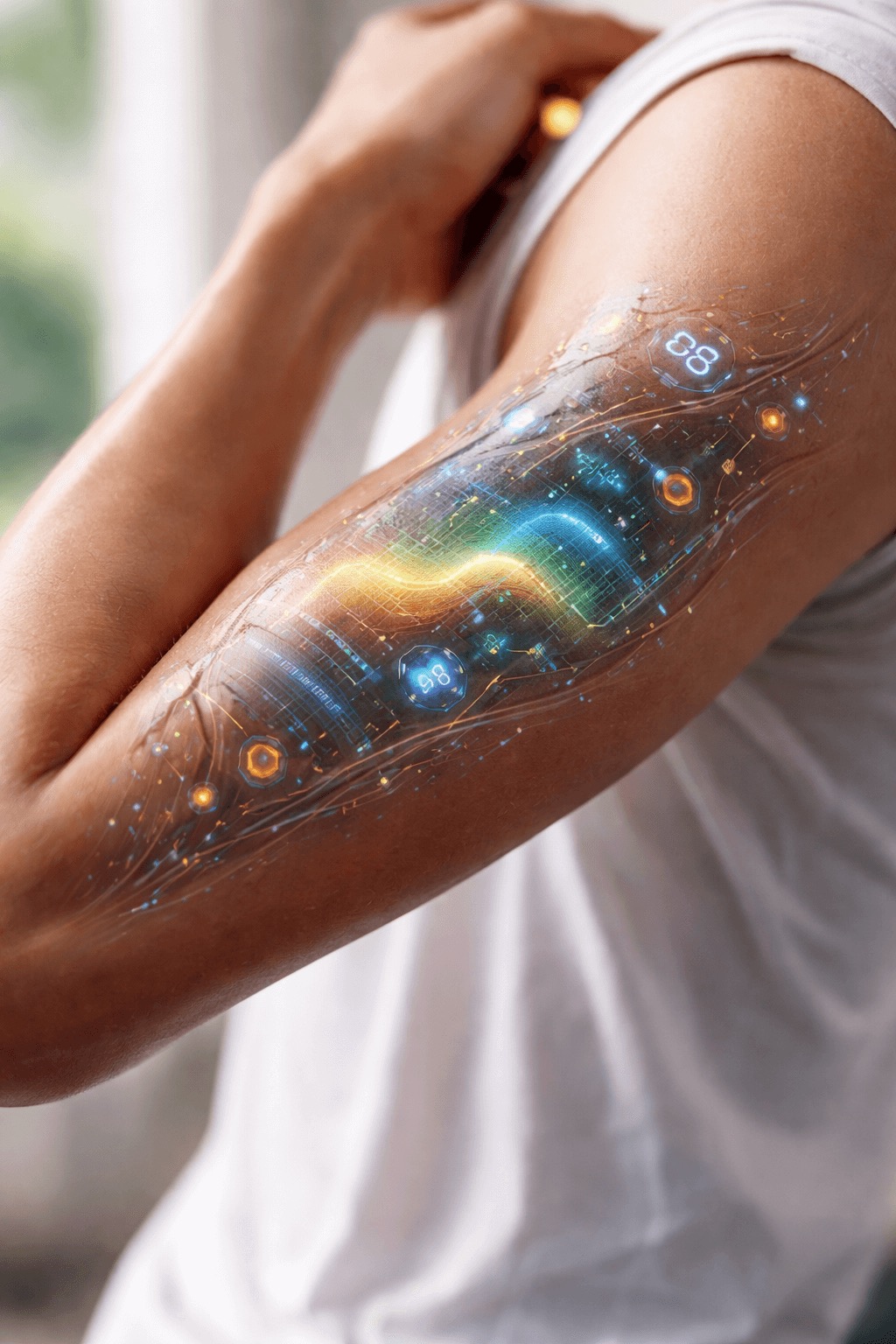
2029: Electronic skin patches packing displays, sensors, and processing power.
2038: Wearables that conform perfectly to any curve of your body—no hard edges remaining.
What you’ll actually experience by 2030
- Phones that roll up into a pen-sized tube or stretch to double their display area on demand.
- Screens that watch scratches vanish right before your eyes.
- Thin, skin-like patches that track health, show notifications, and harvest energy from movement.
- Clothing woven with flexible displays and embedded sensors.
- Devices that survive drops, twists, and daily abuse—practically indestructible.
A regular morning in 2040
You wake up. Your “device” is a soft film wrapped around your wrist—it stretches naturally as you move.
You tug it wider for a full holographic workspace, then release—it snaps back into a sleek bracelet.
Yesterday’s scratch? Completely gone, healed while you slept.
Your shirt subtly glows with incoming notifications. Your glasses flex comfortably without fear of snapping.
Tech finally moves with you, adapts to you—resilient, alive, intuitive.
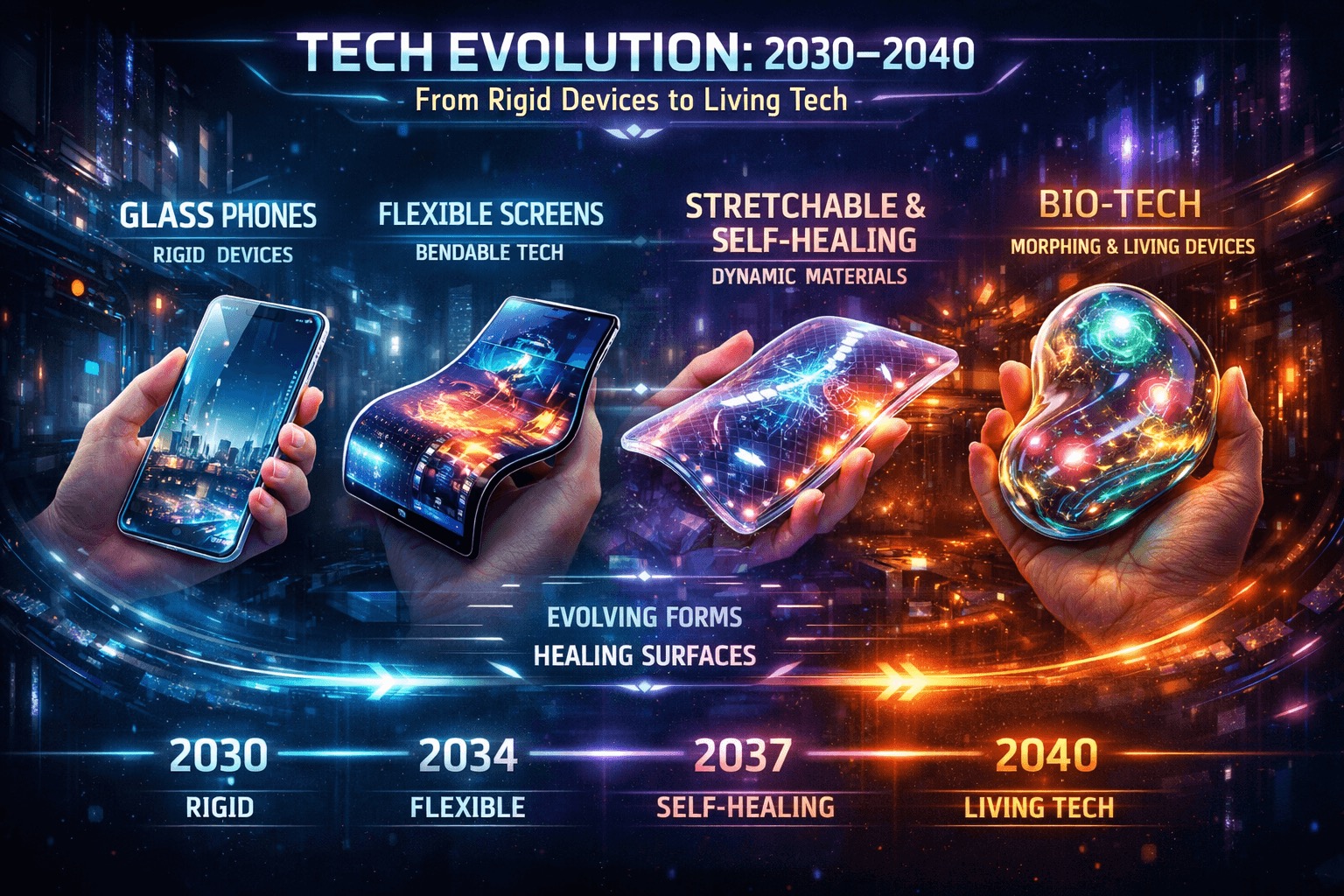
Everything here is already prototyped and scaling fast: billions pouring in from Samsung, Apple, Google; self-healing surfaces hitting consumer products; stretchable batteries in advanced trials.
That brittle glass-and-metal brick in your pocket today will have your kids laughing in fifteen years the same way old brick phones crack us up now.
Ready for a world where your devices bend, stretch, and heal—literally becoming an extension of you?