01. Introduction: The Biggest Smartphone Revolution in History (2030–2040)
Imagine: in just five to ten years, the word “smartphone” will feel as outdated as “flip phone” does right now. Ready to step into a future where your tech isn’t something you hold—but something you think with?
We’re on the edge of the most explosive transformation in personal tech history: the 2030–2040 decade. By 2033, the last rigid-screen handset will sit in a museum beside the iPhone 4. By 2035, 99% of anything sold as a “phone” will be foldable, rollable, or holographic—driven by AI and quantum-boosted processing. By 2040, more than half of all human communication will skip devices entirely, flowing through direct neural links, AR overlays, and ever-present ambient intelligence.
And none of this is science fiction. These are real, funded patents, working prototypes, and early trials already underway in 2025.
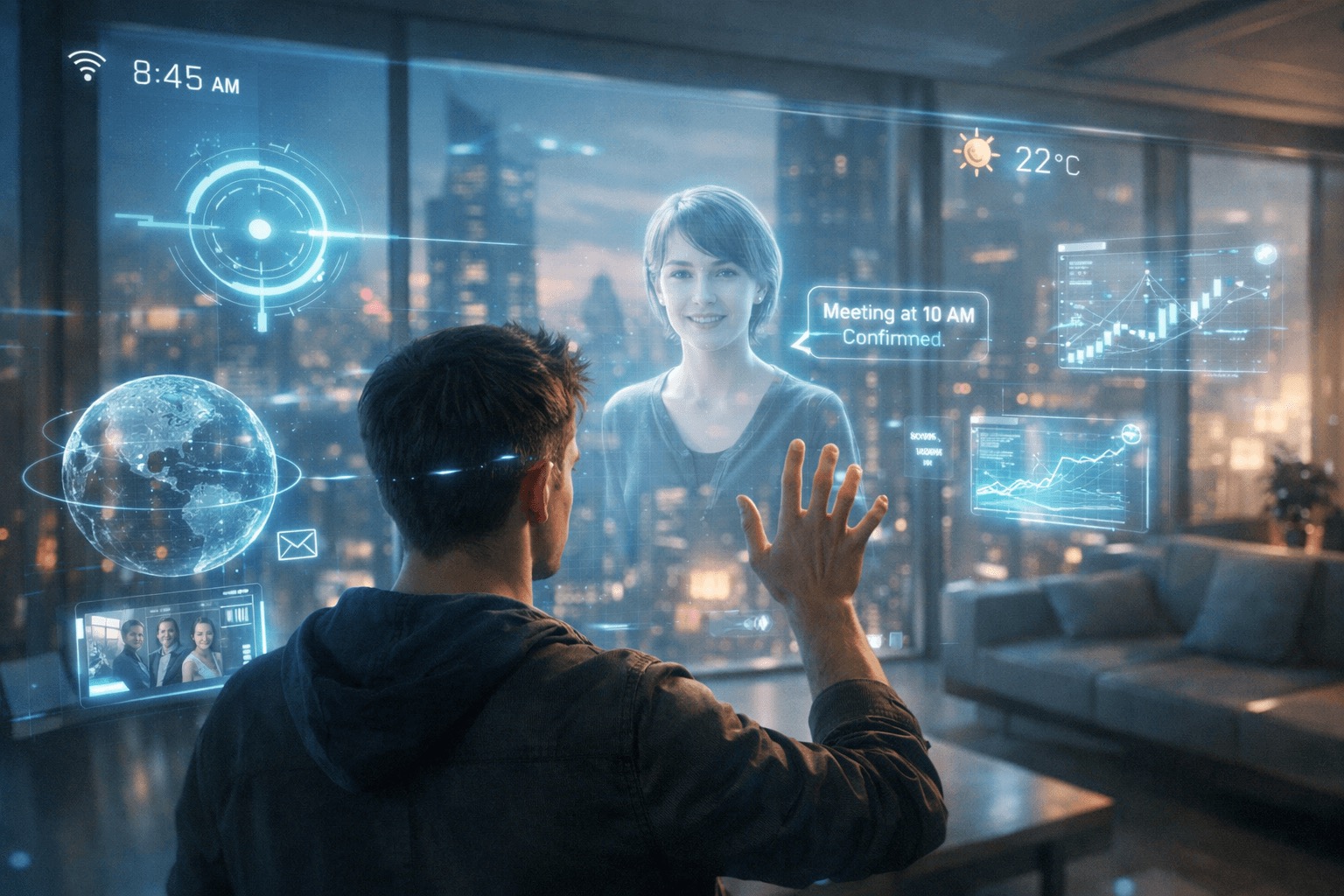
Three unstoppable waves already crashing forward
-
Holographic and AR displays wipe out physical screens
2025: Apple Vision Pro and Meta Quest are just the opening act.
2028: Samsung and Huawei ship affordable holographic projectors inside devices.
2032: Your “phone” projects full 3D interfaces into the air—screens become unnecessary for almost everything. -
AI evolves into your true second brain
2024: Generative models like ChatGPT merge into everyday assistants.
2029: Deeply personal AI that predicts your needs, learns your habits, and handles complex tasks on its own.
2038: Fully symbiotic AI fused with your thoughts—acting before you even finish asking. -
Brain-computer interfaces turn thought into instant action
2024: Neuralink’s first human implants prove basic mind control.
2029: High-bandwidth BCI hits consumer wearables—text and call purely by thinking.
2038: Seamless mind-to-world connection: imagine a message and it sends, picture a map and it appears in AR.
What you’ll actually experience by 2030
- $200 AR glasses that crush the classic smartphone market, turning any surface into an interactive display.
- Real-time universal translation: speak your language, hear theirs—with every cultural nuance preserved.
- AI companions that log your entire life, optimize your routines, and even negotiate for you.
- Wallet-sized gadgets with DNA-based infinite storage and nano-batteries that go weeks without charging.
- Quantum-secured calls no hacker can touch, plus apps designed and built in seconds just for you.
A regular morning in 2040
You wake up. No phone on the nightstand. No charger. No case.
You think “news”—perfectly curated headlines drift into your vision, delivered by your AI.
You think “call Mom”—her full life-size hologram appears, conversation flowing instantly across oceans with zero lag.
Your clothes quietly track health metrics. The air around you responds to subtle gestures. Even your coffee mug lights up with notifications if you want.
Every human on the planet will command more connectivity and raw compute than all of humanity combined had in 2025.
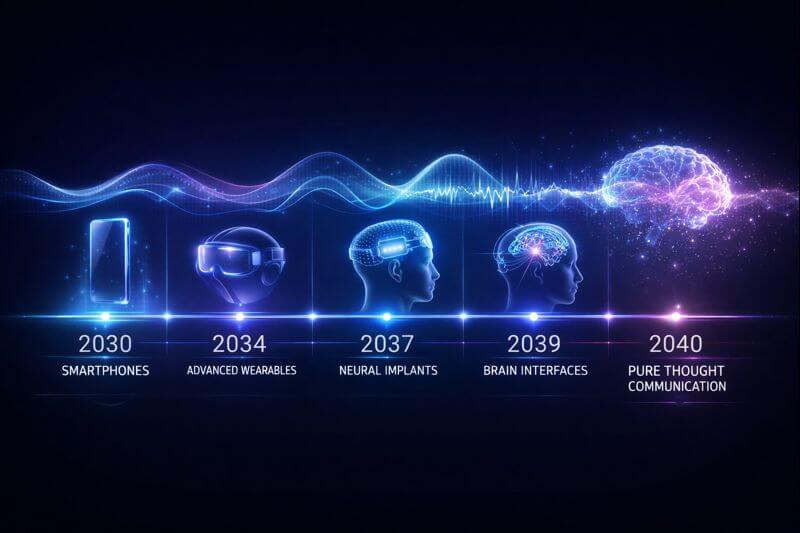
Everything described here is already in motion: billions invested, prototypes tested, regulations adapting fast.
The device in your hand right now will have your grandkids laughing in fifteen years the same way a rotary phone makes you smile today.
Ready for a world where staying connected feels as effortless as breathing?